

While H5N1 in dairy cattle in Kansas does not constitute a “new state infection”, it does mark a return of diagnosed H5N1 infection to Kansas last reported early in the dairy outbreak in the spring of 2024.
Many states (including Washington, also infected last week) elect to proactively announce some specifics of the case(s), including how the case was diagnosed (milk testing versus clinical illness), degree of illness in the herd and morbidity-mortality in the herd, any steps taken to protect other herds and worker safety, etc. Here is what Kansas has elected to post on their publicly facing site to date, which links to the USDA site just below it:
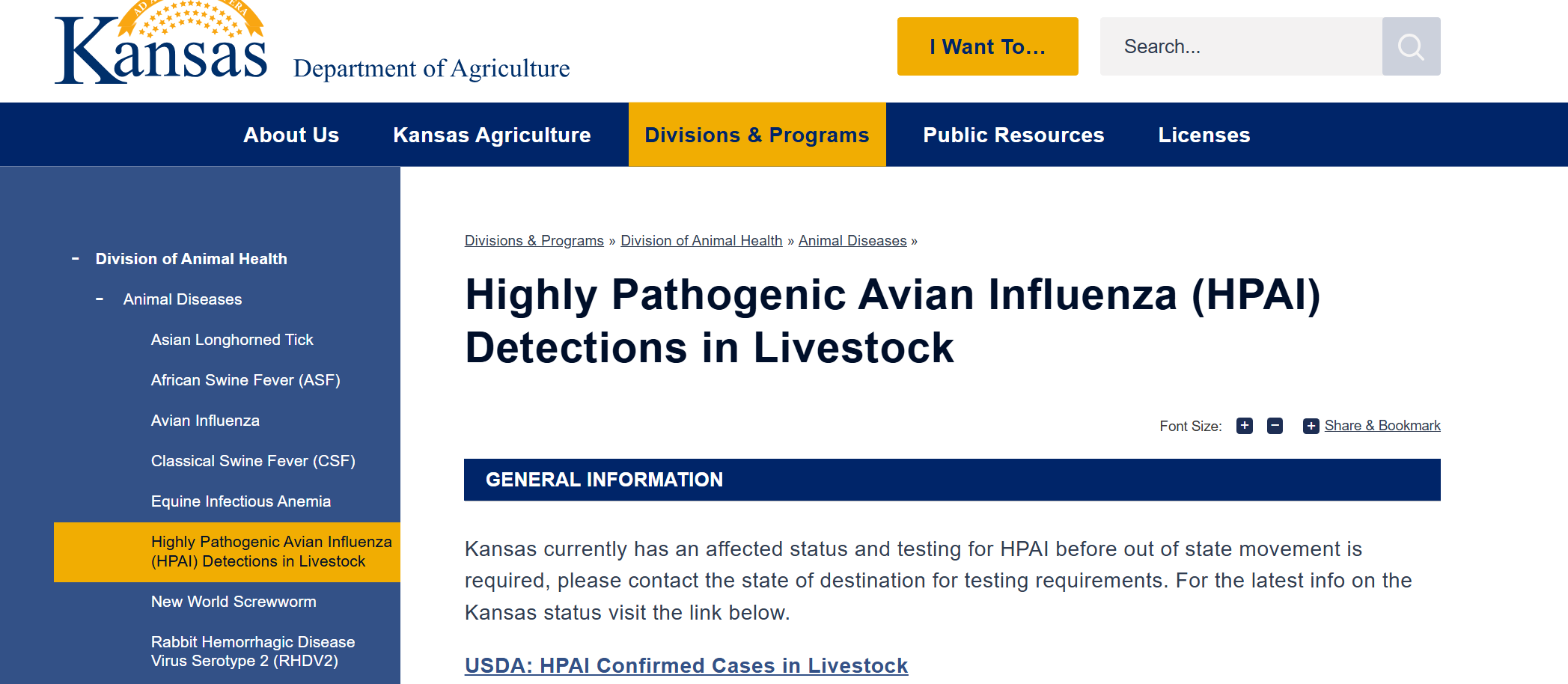
Highly Pathogenic Avian Influenza (HPAI) Detections in Livestock | Department of Agriculture
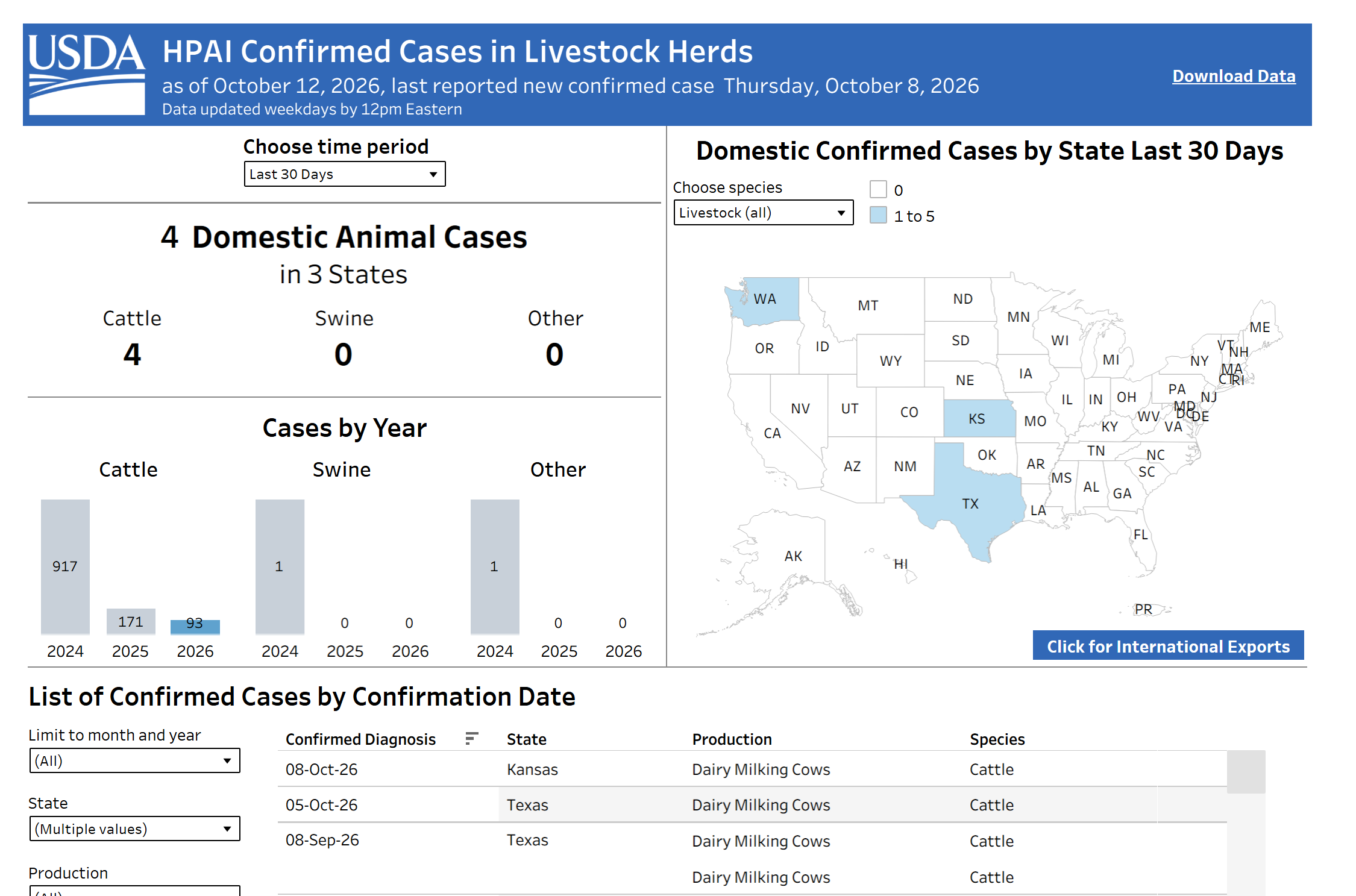
HPAI Confirmed Cases in Livestock | APHIS
The Kansas Department of Agriculture Division of Animal Health will likely sooner or later have something to release on these cases. Their telephones and e-mail boxes must be overflowing with inquiries. USDA-National Milk Testing Strategy (NMTS) basically let the cat out of the bag last Friday by classifying the state as “Affected” on its weekly state status report map.
Until the world health community decides differently, H5N1 2.3.4.4b of any flavor is a reportable disease in dairy cattle and in all domestic livestock. We don’t have the option of holding back suspicious or especially confirmed test results to protect our clients or our industries. Shading or minimizing reporting is another form of abuse when the result is potential further spread of infection due to ignorance of known information. The concept of disease reportability is to encourage rapid, open, and transparent sharing of as much information as can be openly shared without violating confidentiality or subjecting involved parties to undue financial risk. All parties gain when we understand better together the disease agent we are facing.
Having stated that, I completely understand the pressures facing state and federal career animal health officials in a time when political leadership lacks any semblance of moral fiber in backing principled decision-making. The crisis we see in public health from bankrupt political leadership is just as relevant to animal health at both the federal and state levels. Politically influential donors and individuals from large livestock commodity lobbying groups often weigh in against needed disease management measures, recommended alterations or prohibitions that may adversely affect business continuity in the face of disease threats.
Some state and federal officials continue to operate with admirable internal and external moral compasses; most others are doing the very best they can under very challenging circumstances. I don’t pretend to understand the circumstances in the Kansas dairy industry and regulatory world. “What’s the Matter with Kansas” (an old political book- see below) is a clever title for an unrelated subject; however, the results from their H5N1 case(s) affect us all!
Let’s hope viral spread among dairy herds is minimized and other species (including cats, rodents, and poultry) and human workers are extremely well monitored. Plus please let us know ASAP whether this is B3.13 or D1.X and where it may have originated. We still have so much to learn — together!
John
Any indication of what county this is in?